Introduction
You have probably seen the name in headlines. You might have read the political statements or the breaking news alerts. But the headlines rarely tell you who a person really was. They give you facts, but they do not give you a heartbeat.
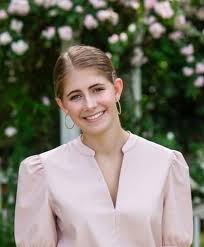
I want to tell you about Ella Cook Brown. Not just the tragedy, but the life. Ella was a 19 year old sophomore at Brown University who was tragically killed in a mass shooting on December 13, 2025 . She was a victim of senseless violence, but she was so much more than that. She was a friend, a pianist, a babysitter, and a woman of deep faith.
In this article, we are going to look past the news ticker. We will explore who Ella really was. We will look at her childhood in Alabama, her courageous time at Brown, and the beautiful legacy of kindness she left behind. You will learn why her friends called her “Ellabama” and why her church described her as a bright light. Let us remember the person, not just the story.
Who Was Ella Cook? More Than a Headline
If you only read the news, you might think Ella Cook was defined by her politics. That is what happens in our world today. We label people by their affiliations. But for those who actually knew her, Ella Cook Brown was defined by her heart.
Ella grew up in Mountain Brook, Alabama. This is a close knit suburb of Birmingham where neighbors actually know each other’s names . She was the oldest of three children. She had two loving parents, Anna and Richard, and two siblings named Hooker and Mary Hamner . By all accounts, she was protective of her younger siblings and selfless to a fault.
You have to understand what kind of student she was. Ella was not just smart. She was relentlessly curious. She studied French, mathematics, and economics at Brown . But she did not just want to pass her French class. She wanted to be fluent. As one friend put it, she did not want to just play “Hot Cross Buns” on the piano. She wanted to play Beethoven . That drive, that commitment to excellence, was present in everything she touched.
The “Ellabama” Persona: Balancing Faith and Friendship
Here is a detail that I absolutely love. When Ella arrived at Brown, she met a friend named Theo on the first night. Theo had already met several girls named Ella that day. But none of them were from Alabama. So, for the first month, he did not call her Ella. He called her “Ellabama” . It stuck because it fit. She brought a piece of Southern grace to the Ivy League.
Ella had a specific ritual with her friends. They called it “carpet time” . Imagine a white rug in a pastel bedroom. Students would sprawl out on the floor. They would chat. They would do homework. But there was a rule. If you wanted to join, you had to sing a song into the karaoke mic first. That was Ella. She made you work for the community a little bit, but the reward was genuine warmth.
Her faith was the engine of her life. She was a devout Christian and a parishioner at the Cathedral Church of the Advent in Birmingham . She taught Sunday school. She babysat constantly. Her obituary stated that she believed her highest calling was to be a mom one day . In a high pressure environment like Brown, she remained grounded. She was known for her “quiet gravity.” She did not need to shout to be heard.

Courage on Campus: The Conservative Voice
We cannot ignore the aspect of her life that drew the most attention. Ella was the Vice President of the Brown Republicans . If you know anything about Brown University, you know it is a very liberal campus. Being a conservative there takes guts. It takes a specific kind of courage to lead an organization when you are in the minority.
Her friend Alex Shieh noted that being a conservative at Brown is not easy. But Ella was never afraid to share her beliefs . She was resolute. However, it is crucial to understand the nuance here. Her friends say that while she was a Republican, she did not see herself as a highly political person . Her religion was her main belief system. Politics came second.
She did not isolate herself in an echo chamber. In fact, she sought out people who disagreed with her. She befriended liberals and Jews and people from the Northeast who had never met a “Southern Belle” before. She wanted to understand them. That is rare today. That is maturity.
The Tragedy at Brown University
We have to address what happened, even though it is painful. On December 13, 2025, a gunman entered an engineering building on campus. Students were studying for final exams. It was just before the holidays. Ella was in an economics review session.
She was shot and killed. Another student, Mukhammad Aziz Umurzokov, also died. Nine others were injured . The campus went into lockdown. Friends started texting each other, panicking. Ella’s friends watched her phone location. It was still in the building. They hoped she had just dropped it while running away .
The aftermath was chaos and grief. The shooter was later identified as Claudio Neves Valente, a former graduate student. He was found dead days later . The motive remains unclear, though it shook the nation.
Reactions from Leaders
Because Ella was the Vice President of the Brown Republicans, her death drew national political attention. Many leaders spoke out.
Vice President JD Vance offered condolences, stating it takes special courage to lead conservatives on a left wing campus . White House Press Secretary Karoline Leavitt also shared her sympathies, saying, “There are no words” . Alabama Senators Katie Britt and Tommy Tuberville also honored her memory. Senator Tuberville even took to the Senate floor to deliver a speech about her life .
However, some of these reactions frustrated her close friends. While they appreciated the prayers, they felt the political speculation overshadowed who Ella was. Some politicians speculated she was targeted because of her beliefs, though police never confirmed a motive . Her friends wanted the world to know that she was not a symbol. She was a girl who loved karaoke and French.
The Funeral: A Celebration of Light
On December 22, 2025, a funeral was held for Ella at the Cathedral Church of the Advent in Birmingham . Hundreds of people showed up. Her family had a specific request. They did not want people to wear black. They asked attendees to wear “Easter colors” . Pink, blue, yellow, and purple filled the pews. That is how they wanted to remember her. Not with darkness, but with the hope of resurrection.
The reverend described her as an “incredible, grounded, faithful bright light” . A professor wrote a letter to her parents that was read aloud. He said Ella was “smart, confident, curious, kind, principled, brave” . He noted that she had a big impact on campus in only three semesters.
There was a specific moment at the funeral that moved many people. A reverend shared a dream he had. In the dream, he saw Ella cross country skiing up a hill with her family. He was behind her. Suddenly, Ella turned around and shouted confidently, “Come on, will you?” . For those who loved her, that was Ella. Always leading. Always encouraging. Asking you to keep up.
How to Honor Her Memory
So, what do we do with this sadness? We cannot bring her back. But we can learn from how she lived.
Ella taught us that you can be strong in your beliefs without being cruel to others. She was a conservative on a liberal campus, yet she had friends from every background. She did not see people as political objects. She saw them as souls.
She also taught us about excellence. She studied French until she was fluent. She practiced piano until she could play the masters. Whatever you are doing today, ask yourself: Are you just stumbling through? Or are you trying to be excellent?
Finally, she taught us about presence. Her friends didn’t just text each other. They had “carpet time.” They sat on the floor. They sang silly songs. They did homework together. In our digital world, Ella Cook Brown reminds us that showing up in person matters.
Conclusion
It is easy to scroll past a news story. It is easy to see a name and feel nothing because there are so many tragedies in the world. But I hope you will pause for Ella.
She was 19 years old. She loved her family. She loved the piano. She was studying French so she could travel the world. She babysat kids because she wanted to be a mom one day. She was a light in a dark room.
We should not remember her for how she died. We should remember her for how she lived. She lived with courage, with faith, and with a lot of laughter.
Who in your life reminds you of Ella? Is there someone you need to reach out to today? Do not wait. Go be present for them.
Frequently Asked Questions (FAQs)
Q1: What exactly happened to Ella Cook Brown?
Ella Cook was a 19 year old sophomore at Brown University who was fatally shot during a mass shooting on campus on December 13, 2025. She was attending an economics review session when the attack occurred .
Q2: What was Ella Cook’s political role at Brown?
She served as the Vice President of the Brown Republicans. Despite the campus being largely liberal, she was known for being brave and outspoken about her conservative beliefs while remaining friends with people of all political stripes .
Q3: Where did Ella Cook grow up?
Ella grew up in Mountain Brook, Alabama, which is a suburb of Birmingham. She was a lifelong parishioner at the Cathedral Church of the Advent in Birmingham .
Q4: What was Ella Cook studying in college?
She was concentrating in French and Mathematics Economics. She was also an accomplished pianist who loved playing complex classical music .
Q5: Was the shooter ever caught?
The shooter was identified as Claudio Neves Valente, a 48 year old former graduate student. He was found dead from a self inflicted gunshot wound in a New Hampshire storage facility several days after the shooting .
Q6: Why did her family ask people to wear “Easter colors” to the funeral?
Ella was a devout Christian. The family requested Easter colors (pastels like pink, blue, and yellow) instead of black to reflect their belief in the resurrection and eternal life, celebrating her faith rather than just mourning her death .